
Discover practical, evidence-based healthy habits for kids. Learn how to encourage good nutrition, physical activity, sleep, and hygiene naturally.
Healthy habits for kids include balanced nutrition, regular physical activity, adequate sleep, and good personal hygiene. Establishing these simple daily routines early supports normal growth, strengthens the immune system, and builds a strong foundation for lifelong well-being. Parents can encourage these habits through positive modeling, consistent daily structures, and making healthy choices fun and accessible.
Table of Contents
Introduction
Watching children grow, learn, and play is one of the greatest joys of parenting. Every parent wants their child to grow up strong, happy, and full of energy. However, with busy schedules, screen time, and a world full of convenient snack options, helping children build healthy habits can sometimes feel challenging.
The good news is that children do not need complicated wellness routines. Building healthy habits for kids is about small, consistent daily choices that fit naturally into family life. By guiding children gently, families can create habits that protect health today and support well-being for years to come.
Why Healthy Habits Matter Early in Life
Childhood is a period of rapid physical, mental, and emotional development. The routines and behaviors established during these formative years often shape adult habits.
According to public health guidance from organizations like the World Health Organization (WHO) and the Centers for Disease Control and Prevention (CDC), early healthy lifestyle patterns help:
Support proper bone, muscle, and brain growth.
Maintain a healthy weight and metabolic balance.
Strengthen the immune system against common illnesses.
Improve concentration, learning capacity, and mood.
Reduce the risk of chronic conditions later in life, such as heart disease and type 2 diabetes.
Core Pillars of Healthy Habits for Kids
A well-rounded daily routine rests on several foundational pillars. Each plays a distinct role in keeping children healthy and energized.
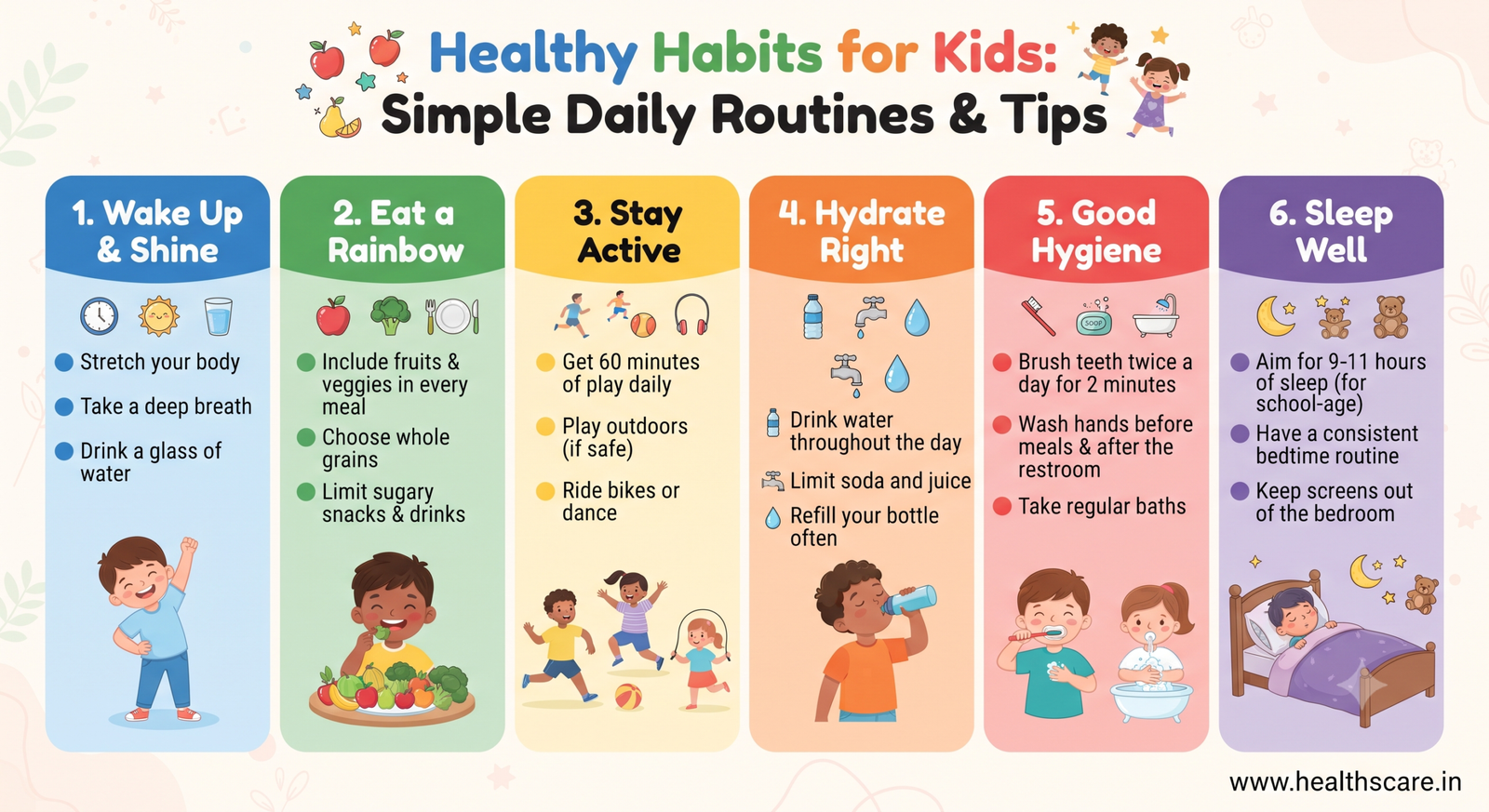
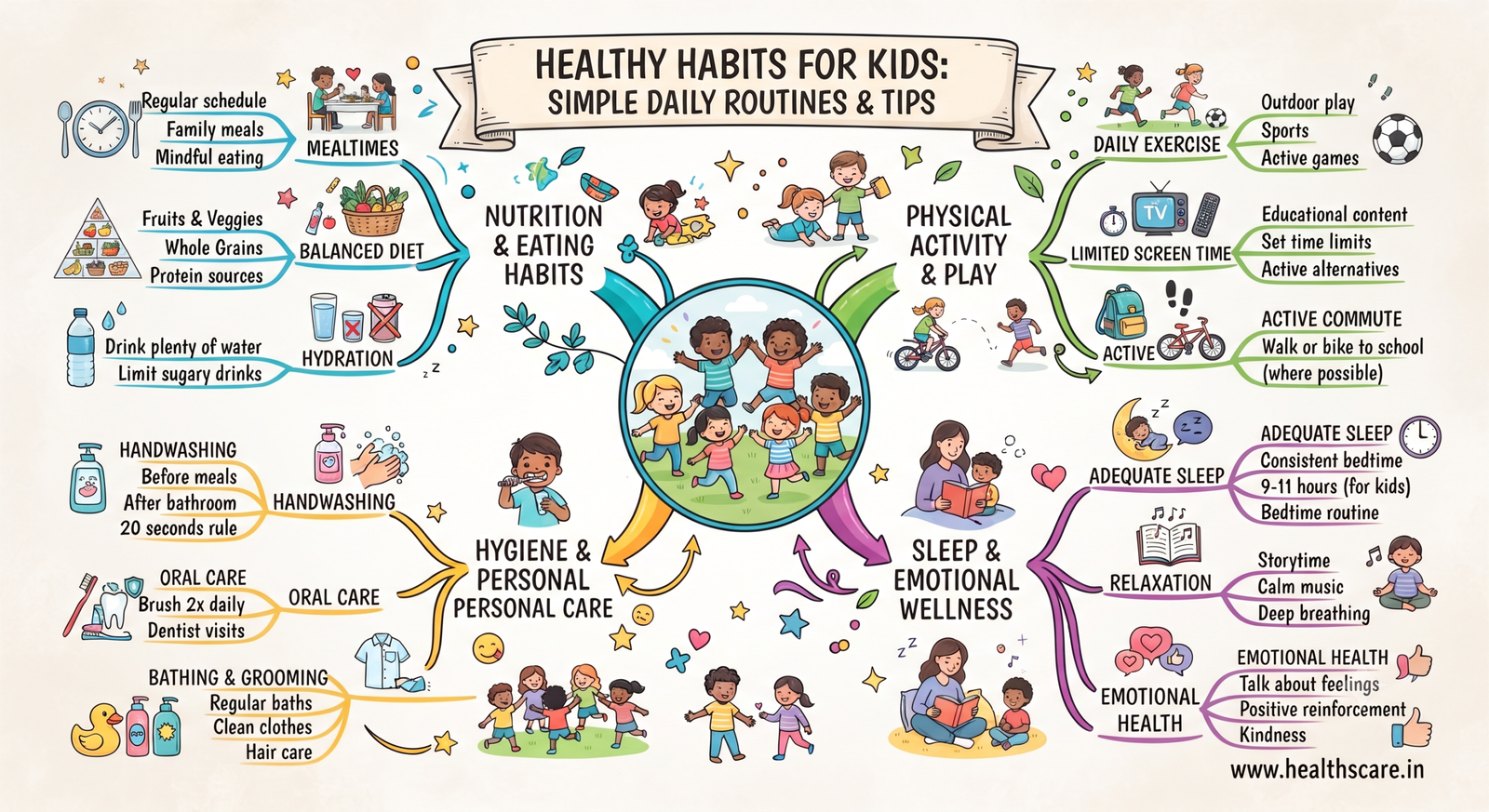
1. Balanced Nutrition and Hydration
Growing bodies require a wide variety of nutrients to function properly. Rather than focusing on strict diets, the goal is to offer a colorful, balanced array of whole foods.
Fruits and Vegetables: Provide essential vitamins, minerals, and dietary fiber that support digestion and immunity.
Whole Grains: Foods like oats, brown rice, and whole-wheat bread provide steady energy for school and play.
Quality Proteins: Lean meats, eggs, beans, lentils, and dairy products support muscle growth and tissue repair.
Water: Water is the best choice for hydration. Encouraging regular sips throughout the day helps prevent fatigue, headaches, and dehydration.
2. Regular Physical Activity and Play
Children are naturally active, but modern distractions often lead to prolonged sitting. Regular physical movement is vital for physical and mental health.
Daily Movement: Aim for at least 60 minutes of moderate-to-vigorous physical activity daily for school-aged children.
Outdoor Play: Running, jumping, cycling, and playground games build strength, coordination, and balance.
Family Involvement: Walking together after dinner or playing active games makes exercise a fun, shared family experience.
3. Quality Sleep and Rest
Sleep is not just a time for rest; it is when a child’s body actively repairs tissues, consolidates memories, and releases growth hormones.
Recommended Hours: Younger children need 10 to 13 hours of sleep (including naps), while school-aged children generally need 9 to 11 hours each night.
Consistent Bedtimes: Maintaining a regular sleep schedule helps regulate the body’s internal clock.
Wind-Down Routines: Turning off screens at least an hour before bed, reading a book, or dimming lights helps signal the body that it is time to sleep.
4. Personal Hygiene and Germ Prevention
Simple hygiene routines protect children from common infections and teach lifelong self-care.
Handwashing: Teach children to wash hands thoroughly with soap and water before eating, after using the restroom, and after playing outside.
Dental Care: Encourage brushing teeth twice a day with fluoride toothpaste and flossing daily to prevent cavities and gum disease.
Practical Tips for Parents: Making Habits Stick
Forcing children to adopt strict routines often leads to resistance. Instead, parents can use positive reinforcement and gentle guidance to make healthy habits a natural part of daily life.
Be a Role Model: Children learn primarily by watching the adults around them. When parents eat nutritious foods, drink water, stay active, and get enough rest, children are much more likely to follow suit.
Keep Portions and Choices Simple: Avoid turning mealtimes into battlegrounds. Offer nutritious options and let children choose when they are full.
Limit Screen Time: Balance entertainment screen time with active play, reading, and creative hobbies.
Involve Children in the Process: Let kids help pick out vegetables at the market, wash produce, or help stir ingredients safely. Involvement builds curiosity and enthusiasm for healthy choices.
Frequently Asked Questions
How much sleep does my child need each day?
Sleep requirements vary by age. Toddlers generally need 11 to 14 hours, preschoolers need 10 to 13 hours, school-aged children require 9 to 11 hours, and teenagers need 8 to 10 hours of quality sleep per night.
What is the best way to encourage picky eaters to try new foods?
Picky eating is a common developmental phase. Research suggests that repeatedly offering new foods in a calm, neutral environment—without pressure or rewards—helps children become more comfortable trying them over time.
How can I balance screen time with physical activity?
Set clear, consistent family boundaries regarding screen time. Designate specific times for digital devices and encourage outdoor play, board games, or family walks as engaging daily alternatives.
Are multivitamins necessary for healthy children?
Most children who eat a varied, balanced diet get all the nutrients they need from food. Multivitamins are generally recommended only if a healthcare professional identifies a specific dietary deficiency or medical need.
healthy habits for kids Key Takeaways
Foundational Wellness: Healthy habits built in childhood create a lifelong foundation for physical and mental health.
Balanced Nutrition: Focus on whole foods, colorful vegetables, lean proteins, and plenty of water rather than restrictive diets.
Daily Movement: Encourage at least 60 minutes of active play every day to support strength and development.
Rest Matters: Consistent sleep schedules and bedtime routines are essential for growth, mood, and concentration.
Lead by Example: Children adopt healthy behaviors most effectively when they see supportive adults practicing them daily.
Consult Professionals: Always speak with a pediatrician or healthcare provider if you have specific concerns about your child’s growth, nutrition, or development.
Medical Disclaimer
This article is for informational and educational purposes only and should not be construed as professional medical advice, diagnosis, or treatment. Always consult a qualified pediatrician or healthcare provider regarding any questions or concerns about a child’s health, growth, or medical needs.