
Discover practical, evidence-based strategies for child obesity prevention. Learn how to encourage balanced nutrition, active play, and healthy family habits naturally.

Child obesity prevention focuses on building lifelong healthy habits centered around balanced nutrition, regular physical activity, adequate sleep, and supportive family routines. Rather than focusing on restrictive diets, parents can help children maintain a healthy growth trajectory by encouraging whole foods, limiting sugary drinks and screen time, and fostering an active, positive home environment.
Table of Contents
Introduction
As parents and caregivers, we all want our children to grow up healthy, strong, and confident. One of the most important aspects of children’s health is supporting a healthy weight as they grow. However, modern lifestyles—filled with convenient processed foods, digital screens, and busy schedules—can make maintaining balanced habits feel challenging for many families.
When discussions turn toward childhood weight, it is normal for parents to feel anxious or overwhelmed. It is important to remember that child obesity prevention is never about strict diets, calorie counting, or body shaming. Instead, it is about small, joyful, and consistent family habits that nourish growing bodies and protect long-term well-being.
Understanding Child Obesity: Why Early Habits Matter
Childhood is a critical time for physical development. During these years, the body forms fat cells, builds bone density, and establishes metabolic patterns that often influence adult health.
According to public health guidance from organizations like the World Health Organization (WHO) and the Centers for Disease Control and Prevention (CDC), supporting a healthy weight early in life helps:
Reduce the risk of developing chronic conditions later in life, such as type 2 diabetes, high blood pressure, and heart disease.
Support healthy bone and muscle development.
Improve self-esteem, emotional well-being, and social confidence.
Boost energy levels, concentration, and academic performance.
Core Pillars of Child Obesity Prevention
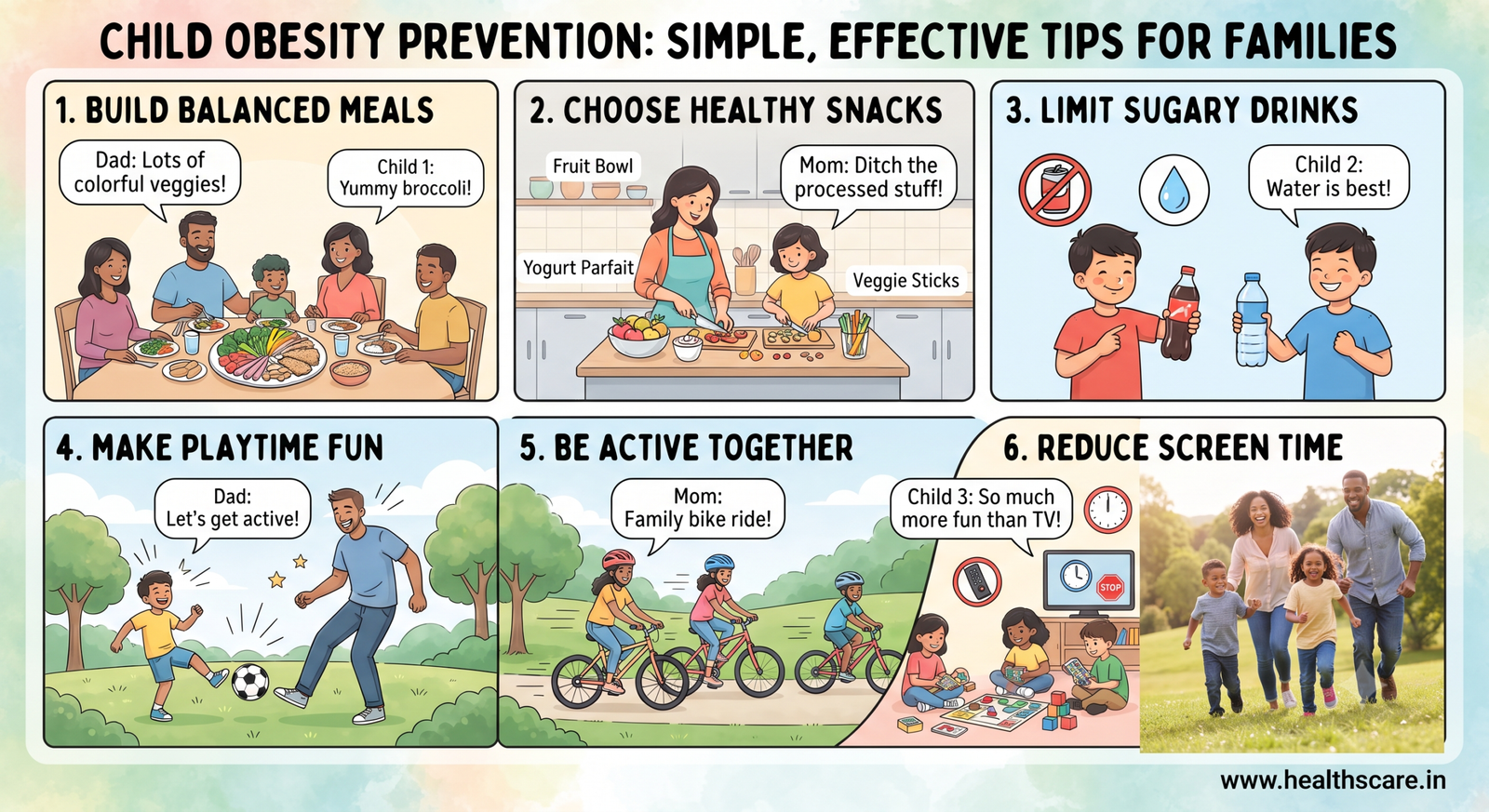
Preventing childhood weight issues does not require drastic measures. It rests on four everyday pillars that fit naturally into family life.
1. Focus on Balanced, Whole Foods
Growing bodies need a wide variety of nutrients, not restricted food quantities. Building a healthy plate should be colorful, simple, and enjoyable.
Abundant Produce: Fill half the plate with fresh fruits and vegetables, which provide essential vitamins, minerals, and fiber to support digestion.
Whole Grains: Choose whole-wheat bread, brown rice, oats, and quinoa over refined grains for sustained energy.
Lean Proteins: Include eggs, beans, lentils, fish, poultry, and dairy products to support proper growth and tissue repair.
Water Over Sugary Drinks: Sugary sodas, packaged juices, and sweetened teas are major sources of excess calories. Water is always the best choice for hydration.
2. Encourage Daily Physical Activity and Play
Movement should feel like fun, not a chore. Children naturally love to run, jump, and explore, but modern entertainment often encourages sitting for hours.
Active Minutes: Aim for at least 60 minutes of moderate-to-vigorous physical activity daily for school-aged children.
Outdoor Play: Park visits, cycling, tag, and sports build cardiovascular health, strength, and coordination.
Family Movement: Weekend walks, playing catch, or dancing together in the living room turn exercise into a positive shared experience.
3. Establish Healthy Sleep Routines
Research increasingly shows a strong connection between inadequate sleep and weight imbalances in children. Sleep regulates the hormones that control appetite and energy.
Recommended Rest: Young children need 10 to 13 hours of sleep, while school-aged children require 9 to 11 hours nightly.
Consistent Bedtimes: Maintaining a regular nighttime schedule helps regulate the body’s internal clock.
Screen-Free Wind-Down: Turn off televisions, tablets, and phones at least an hour before bed to support restful sleep.
4. Limit Screen Time and Sedentary Habits
The more time children spend looking at screens, the less time they spend moving. Prolonged screen time is also frequently paired with mindless snacking.
Set Clear Boundaries: Establish screen-free zones, such as during family meals, and set daily time limits for entertainment media.
Encourage Creative Alternatives: Provide books, puzzles, art supplies, and outdoor games to keep children actively engaged.
Practical Tips for Families: Making Changes Stick
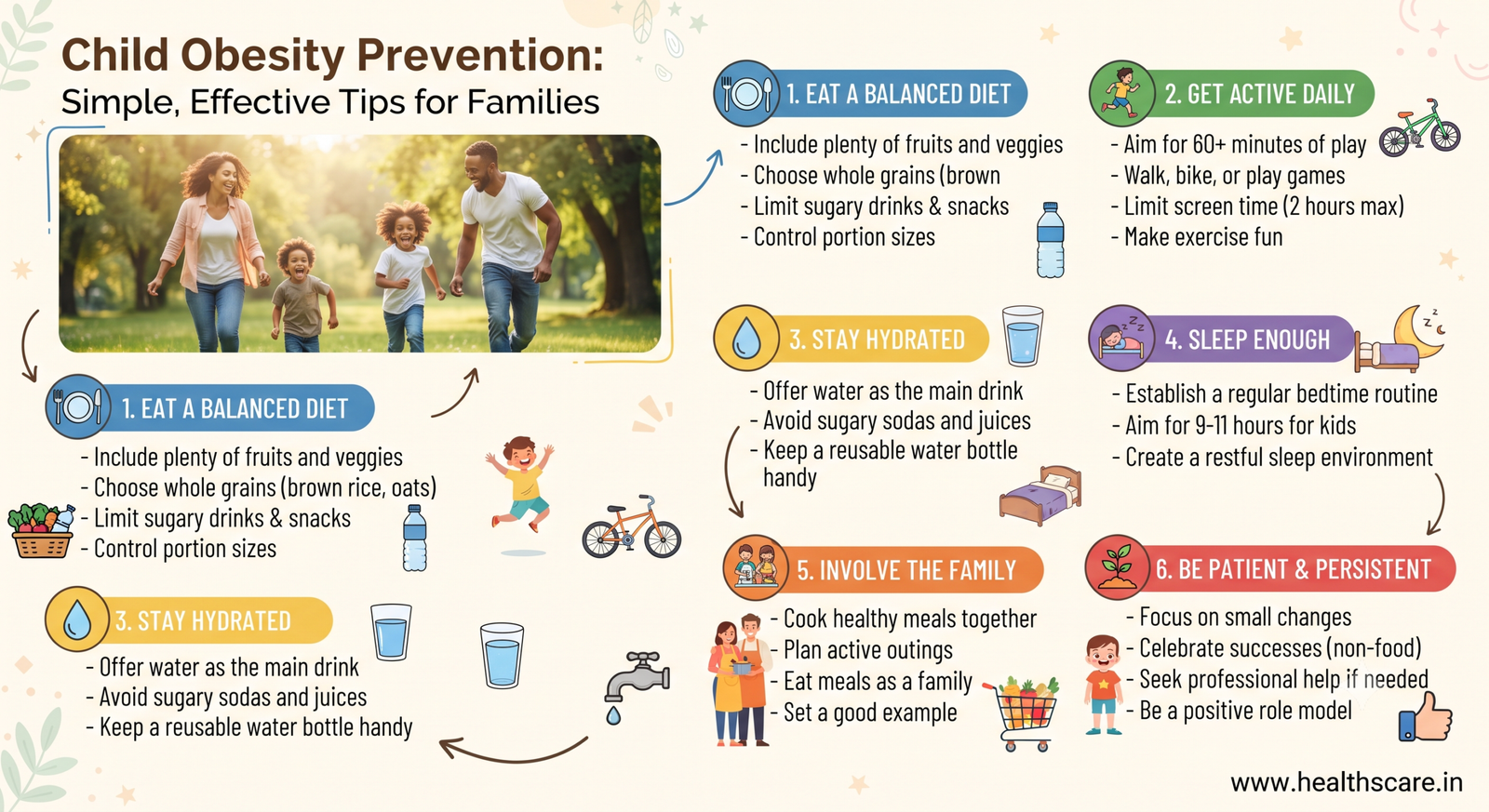
Making healthy lifestyle adjustments works best when approached as a team effort rather than targeting a single child.
Lead by Example: Children watch and imitate adults. When parents eat vegetables, drink water, and stay active, children naturally adopt those same behaviors.
Never Use Food as a Reward or Punishment: Using sweets to reward good behavior or withholding food as a punishment can create unhealthy emotional attachments to eating.
Involve Kids in Kitchen Prep: Let children help wash vegetables, pick out healthy items at the market, or stir ingredients safely. Kids are much more curious to try foods they help create.
Keep Mealtimes Calm: Avoid turning the dinner table into a battleground over vegetables. Offer nutritious options and let children decide when they are comfortably full.
Key Takeaways
Focus on Overall Wellness: Child obesity prevention is about nurturing lifelong healthy habits, not enforcing strict diets.
Prioritize Whole Foods: Build meals around colorful vegetables, whole grains, lean proteins, and water.
Keep Kids Moving: Encourage at least 60 minutes of active play and outdoor movement daily.
Protect Sleep: Ensure children get consistent, age-appropriate rest every night.
Lead as a Family: Healthy changes succeed when the entire household participates together.
Consult Professionals: Partner with your pediatrician to monitor your child’s unique growth and development safely.
Frequently Asked Questions
How can I talk to my child about healthy eating without causing body image issues?
Focus conversations entirely on how food helps bodies grow strong, run fast, and play longer. Avoid discussing diets, weight loss, or labeling foods as “good” or “bad.” Keeping the focus on energy and strength protects a child’s emotional health.
What should I do if my child is a picky eater?
Picky eating is a common developmental phase. Research shows that repeatedly offering new, healthy foods in a neutral, low-pressure environment helps children become comfortable trying them over time. Never force or bribe a child to eat.
How much screen time is appropriate for children?
Major health organizations recommend avoiding digital media other than video chatting for toddlers under 18 months, keeping high-quality programming limited for preschoolers, and placing consistent, sensible limits for older children to ensure physical activity and sleep are never compromised.
When should I consult a pediatrician about my child's weight?
Routine pediatric check-ups are the best place to monitor your child’s individual growth chart. If you notice rapid weight changes that fall outside their normal curve, or if you have specific concerns regarding their nutrition and development, schedule a consultation with your pediatrician.
Medical Disclaimer
This article is for informational and educational purposes only and should not be construed as professional medical advice, diagnosis, or treatment. Always consult a qualified pediatrician or healthcare provider regarding any questions or concerns about a child’s growth, nutrition, or medical needs.