
Discover practical, evidence-based smart parenting hacks to make daily routines smoother, reduce stress, and nurture positive habits in children naturally.
Smart parenting hacks involve small, practical strategies that streamline daily routines, reduce power struggles, and encourage cooperation in children. By establishing predictable schedules, using positive reinforcement, offering limited choices, and connecting before correcting, parents can create a calmer household environment that supports a child’s emotional and behavioral development.

Table of Contents
Introduction
Parenting is one of life’s most rewarding journeys, but let’s be honest—it can also feel wonderfully chaotic. From morning rushes to bedtime battles, every mom and dad has wished for a magic wand to make daily transitions smoother. While magic does not exist, smart parenting strategies come quite close.
You do not need complicated rules or strict discipline tactics to raise happy, cooperative children. Often, small adjustments to how we communicate, organize our days, and respond to big emotions can make all the difference. These practical, compassionate tips help transform everyday friction into moments of connection and growth.
Why Routine and Structure Matter for Children
Children thrive in environments where they know what to expect. Predictability lowers anxiety and helps young brains feel safe and secure.
According to child development experts and pediatric guidance, structured daily patterns help children:
Develop self-regulation and emotional control.
Transition between activities with fewer meltdowns.
Build independence and confidence as they master daily tasks.
Feel a sense of shared responsibility within the family.
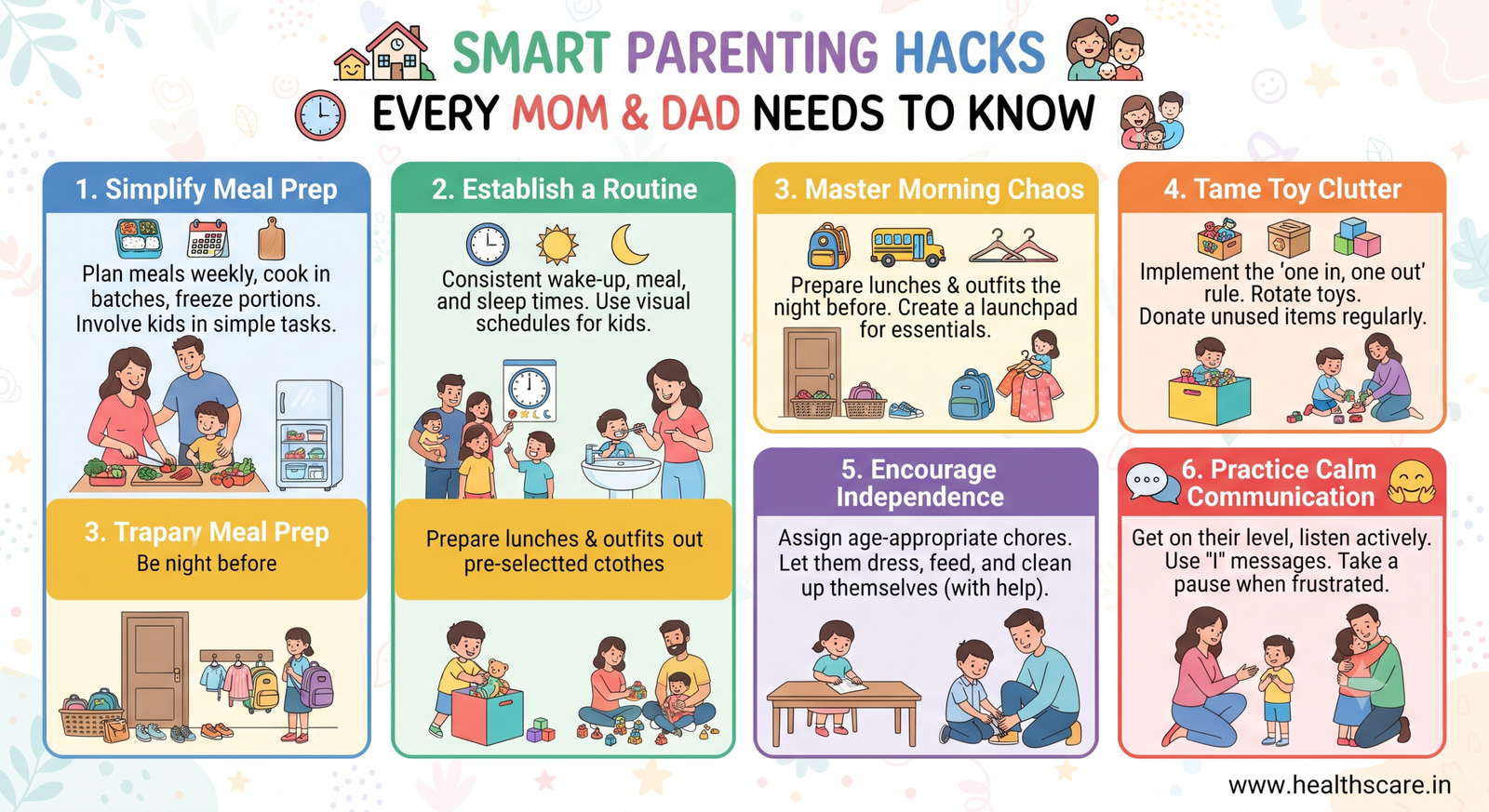
Core Smart Parenting Strategies for Daily Life
Implementing a few thoughtful shifts can drastically change the tone of your household. Here are some of the most effective, stress-reducing approaches for modern families.
1. Give Limited, Empowering Choices
Power struggles often happen because children feel entirely controlled. Giving them a choice within safe boundaries satisfies their natural desire for autonomy without letting them take over.
Instead of: “Put your shoes on right now!”
Try: “Would you like to wear your blue shoes or your red shoes today?”
Why it works: It shifts their focus from resisting a command to making a decision.
2. Connect Before You Correct
When a child is acting out, whining, or ignoring instructions, our immediate reaction is often to correct or scold. However, children rarely respond well when they feel disconnected.
The Approach: Drop down to their eye level, place a gentle hand on their shoulder, and acknowledge their feeling before giving direction. Say, “I see you are having so much fun building blocks, but it is time to clean up for dinner.”
Why it works: Emotional connection lowers defensiveness and opens the door for cooperation.
3. Use Visual Schedules and Timers
Young children process time differently than adults. Saying “we leave in five minutes” is an abstract concept that often leads to surprise and resistance.
Visual Checklists: Create picture-based morning and bedtime charts so children can see what step comes next independently.
Fun Timers: Use a visual countdown timer for transitions like cleaning up or turning off the television. When the timer goes off, the timer transitions the activity—not you.
4. Catch Them Being Good
It is easy to fall into the habit of only speaking up when children misbehave or break a rule. Shifting your attention to positive behavior can dramatically encourage more of it.
Praise the Effort: Instead of generic praise like “good job,” notice specific actions: “I love how patiently you waited your turn while I finished my phone call.”
Why it works: Positive reinforcement builds self-esteem and reinforces the behaviors you want to see repeated.
Practical Tips for Stress-Free Transitions
Transitions—like leaving the house, stopping play, or getting ready for bed—are notoriously tricky. Try these quick hacks to make them smoother:
Use Gamification: Turn routine tasks into a game. See who can put their pajamas on the fastest, or pretend your hallway is a runway for walking to the front door.
Give Advance Warnings: Prepare children for upcoming changes. “In ten minutes, we are going to pack up our toys and head home.”
Involve Them in Problem Solving: If a specific routine always causes tears (like brushing teeth), sit down together during a calm moment and ask, “How can we make toothbrush time more fun?”
Key Takeaways
Prioritize Connection: Children cooperate much more readily when they feel seen, heard, and emotionally connected to their parents.
Offer Controlled Choices: Empower kids by letting them choose between acceptable alternatives to reduce resistance.
Use Visual Cues: Timers and picture charts make time tangible and help children transition smoothly between activities.
Focus on Positive Reinforcement: Acknowledge specific helpful behaviors to encourage them naturally over time.
Stay Calm as a Parent: Your emotional regulation acts as an anchor for your child during moments of stress or big emotions.
Seek Support When Needed: Consult a pediatrician or child psychologist if you encounter persistent behavioral challenges that feel overwhelming.
Frequently Asked Questions
How do I stop daily power struggles with my toddler or child?
Power struggles usually decrease when you offer connection, reduce direct commands, and provide limited choices. Giving children a sense of control over minor aspects of their day helps them feel respected and less defiant.
Are reward charts effective for shaping children's behavior?
Reward charts can be a helpful tool for encouraging new routines or temporary habit changes. However, combining them with verbal praise and emotional connection ensures children learn intrinsic motivation rather than just working for a prize.
How can I handle a public meltdown calmly?
First, take a deep breath to regulate your own nervous system. Remember that onlookers’ opinions do not matter. Move your child to a quieter space if possible, stay calm and present, and offer a comforting physical presence until they feel safe.
Is gentle parenting realistic for everyday family life?
Yes, but it requires patience and practice. Gentle parenting is not about lacking boundaries; it is about holding clear, kind limits while respecting a child’s emotional experience.
Medical Disclaimer
This article is for informational and educational purposes only and should not be construed as professional medical or psychological advice, diagnosis, or treatment. Always consult a qualified pediatrician, family counselor, or healthcare provider regarding any specific concerns about a child’s behavior, development, or emotional well-being.