
Learn about child growth & development from birth through adolescence. Discover developmental milestones, growth charts, nutrition, warning signs, and expert parenting tips to support healthy development.
Child growth & development refers to the physical, cognitive, emotional, social, and language changes that occur from birth through adolescence. Every child develops at their own pace, but regular growth monitoring, developmental milestone checks, proper nutrition, physical activity, quality sleep, and supportive relationships help children reach their full potential. Early recognition of developmental concerns allows timely evaluation and intervention.
Key Facts
✓ Growth measures changes in height, weight, and body size.
✓ Development refers to how children learn to move, think, communicate, feel, and interact with others.
✓ Every child develops at an individual pace.
✓ Regular well-child visits help identify concerns early.
✓ Early intervention often improves developmental outcomes.
Table of Contents
Introduction
Watching a child grow is one of the most rewarding experiences for parents and caregivers. From a newborn’s first smile to a teenager’s increasing independence, every stage of childhood brings exciting changes in physical abilities, thinking skills, communication, emotions, and social relationships.
Growth and development are closely connected but not identical. Growth describes measurable physical changes such as increases in height, weight, and body size. Development refers to the gradual acquisition of skills, including movement, language, learning, emotional regulation, and social interaction.
Because children develop rapidly during the early years, routine monitoring is an important part of pediatric care. Regular health checkups help ensure children are growing well, meeting expected developmental milestones, and receiving timely support if concerns arise.
This comprehensive guide explains how children grow and develop, what milestones parents can expect, factors that influence healthy development, common warning signs, and practical ways to support children from infancy through adolescence.
What Is Child Growth & Development?
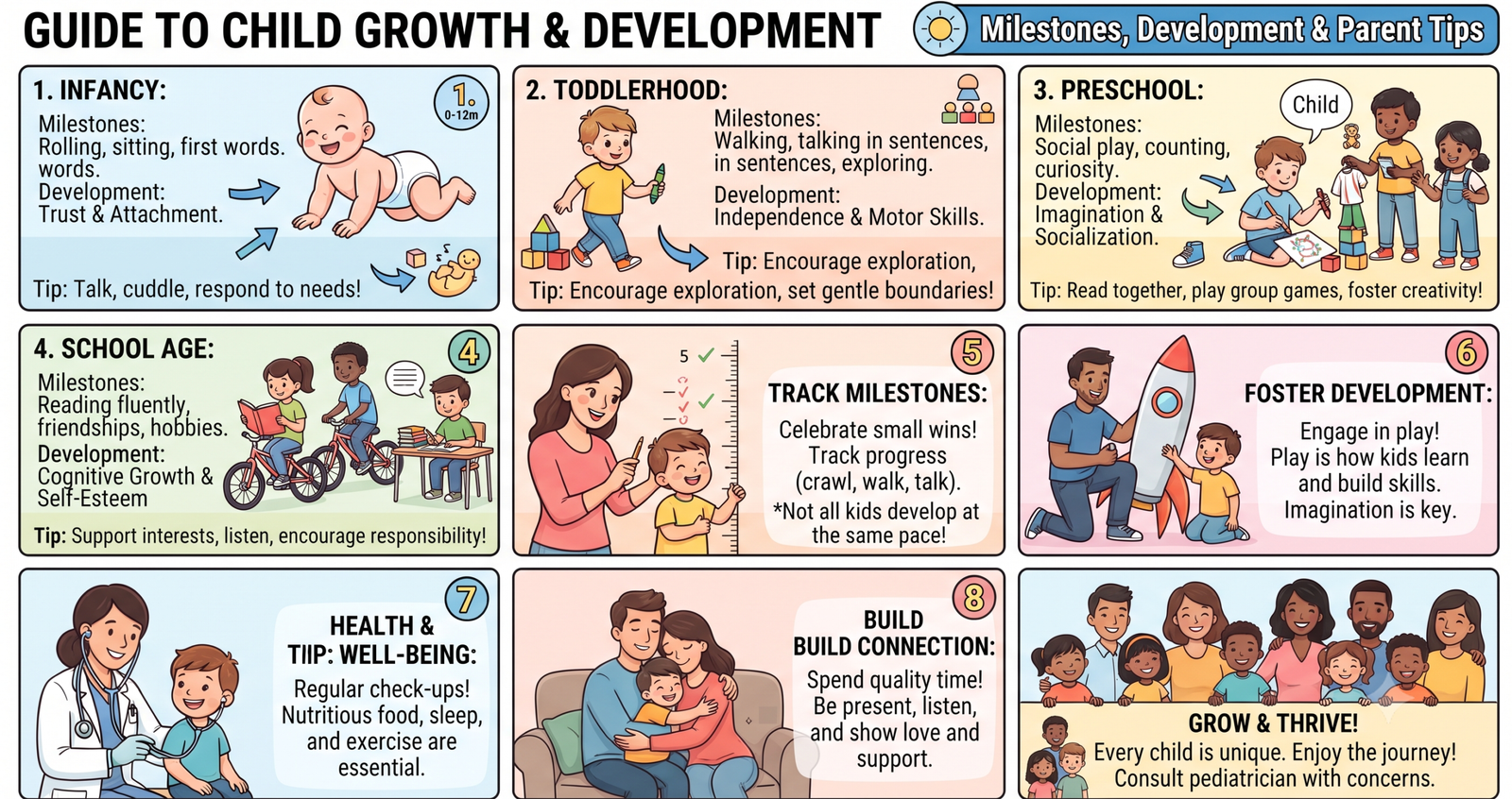
Child growth & development describe the remarkable journey from birth to adulthood. Although these terms are often used together, they refer to different aspects of a child’s health.
Growth means measurable physical changes, such as increases in height, weight, head circumference (during infancy), and overall body size.
Development refers to the gradual acquisition of physical, cognitive, language, emotional, and social skills that allow children to interact with the world and become increasingly independent.
For example:
- A toddler learning to walk is reaching a physical developmental milestone.
- A preschool child learning new words is showing language development.
- A school-age child solving math problems demonstrates cognitive development.
- A teenager managing emotions and relationships reflects social and emotional development.
Growth and development occur together, but they do not always progress at exactly the same pace. Every child is unique, and small variations are normal. Healthcare professionals look at overall progress over time rather than focusing on a single milestone or measurement.
Clinical Insight
Growth is easiest to measure because it involves physical measurements such as height and weight. Development is more complex and is evaluated through observation, developmental screening tools, conversations with parents, and age-appropriate assessments.
Regular monitoring helps identify concerns early, when support and intervention are often most effective.
Why Healthy Growth & Development Matter
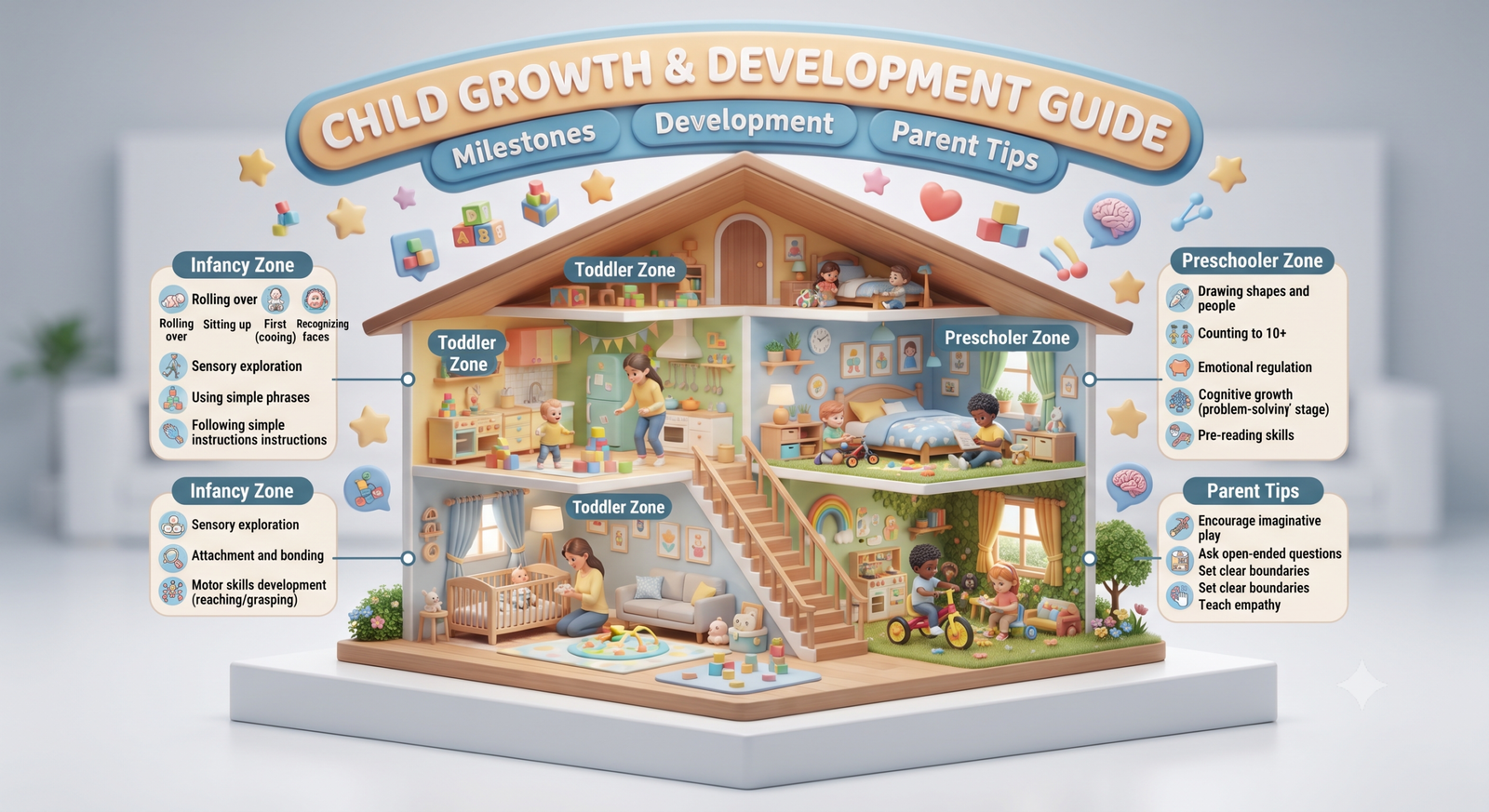
The first years of life are a period of extraordinary change. During this time, the brain forms millions of new neural connections, bones and muscles strengthen, language develops rapidly, and children learn social and emotional skills that influence lifelong health.
Healthy growth and development affect nearly every aspect of a child’s future, including:
- Physical health
- Learning ability
- Academic success
- Communication skills
- Emotional resilience
- Social relationships
- Self-confidence
- Independence
- Long-term health outcomes
Children who receive proper nutrition, preventive healthcare, adequate sleep, physical activity, and nurturing relationships are more likely to achieve their developmental potential.
Key Benefits of Monitoring Growth
Routine monitoring allows healthcare professionals to:
- Identify growth concerns early
- Detect nutritional deficiencies
- Monitor healthy weight gain
- Assess developmental progress
- Recognize hearing or vision problems
- Identify learning or behavioral concerns
- Support families with age-appropriate guidance
Early recognition often leads to earlier support, which can improve developmental outcomes.
Factors That Influence Child Growth & Development
Growth and development are influenced by a combination of biological, environmental, nutritional, and social factors.
Understanding these influences helps parents create an environment that supports healthy development.
1. Genetics
Genetics play a major role in determining:
- Height
- Body build
- Timing of puberty
- Eye and hair color
- Certain health conditions
Children often share growth patterns with their biological family members. However, genetics are only one part of the picture.
2. Nutrition
Proper nutrition provides the energy and nutrients needed for growth.
Essential nutrients include:
- Protein
- Healthy fats
- Calcium
- Iron
- Vitamin D
- Zinc
- Iodine
- Fruits and vegetables
- Whole grains
Poor nutrition during childhood may affect:
- Growth
- Brain development
- Immunity
- Learning
- Energy levels
A balanced diet supports healthy development at every stage.
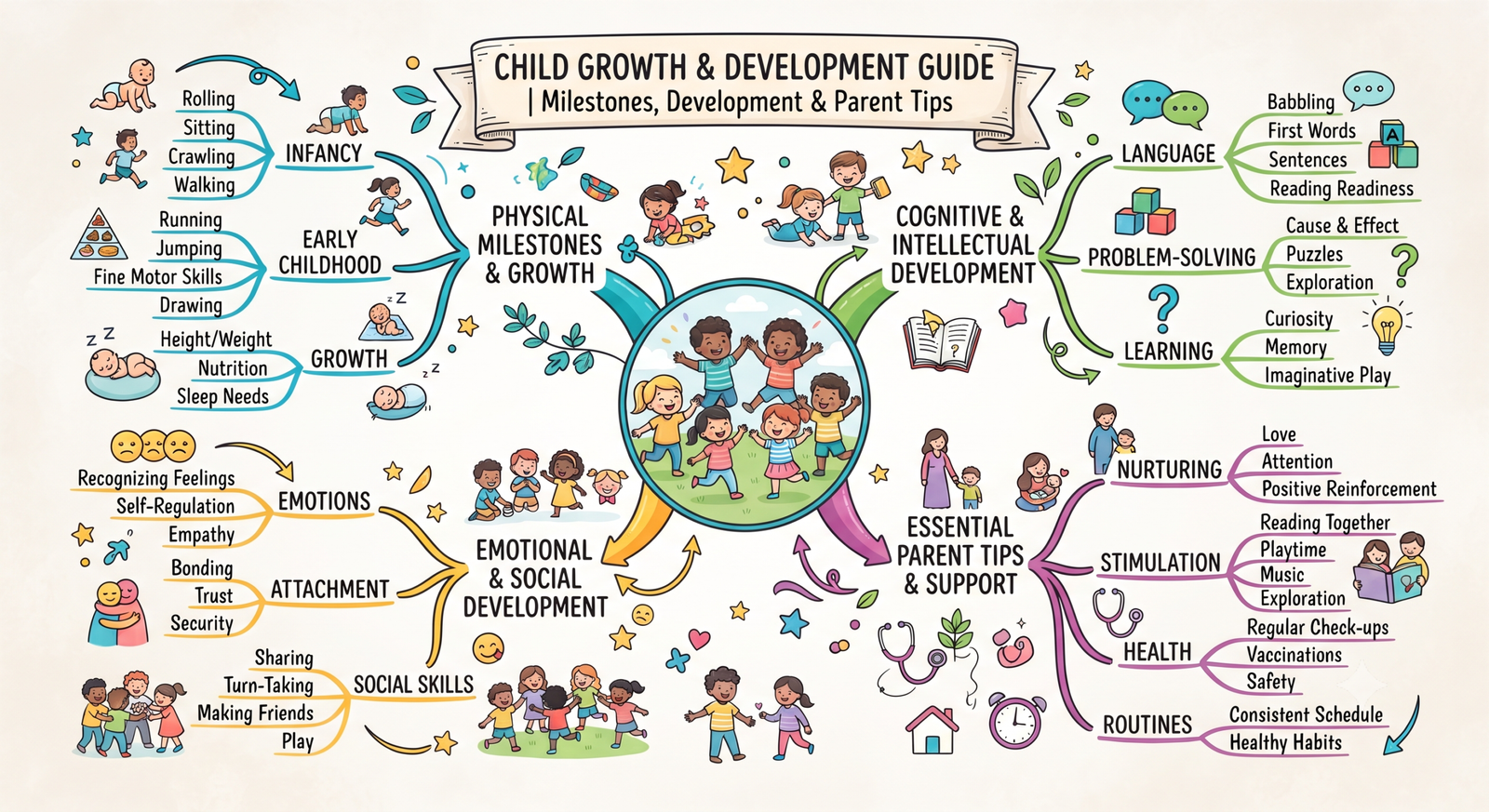
Expert Tip
Instead of focusing on individual “superfoods,” encourage children to eat a variety of nutritious foods from all major food groups. Variety helps provide a broad range of vitamins, minerals, and other nutrients.
3. Sleep
Sleep is essential for both physical growth and brain development.
During sleep, the body releases hormones involved in growth, tissue repair, and overall health.
Children who consistently get enough quality sleep often experience benefits such as:
- Better attention
- Improved memory
- Healthier emotional regulation
- Stronger immune function
- Healthy growth patterns
Poor sleep may affect behavior, learning, mood, and overall well-being.
4. Physical Activity
Daily movement helps children:
- Build strong bones
- Develop muscles
- Improve coordination
- Maintain a healthy weight
- Support heart health
- Build confidence
Active play is especially important during early childhood because it supports both physical and cognitive development.
Examples include:
- Running
- Climbing
- Dancing
- Cycling
- Swimming
- Ball games
- Playground activities
5. Emotional Support
Children thrive in safe, loving, and supportive environments.
Positive relationships with parents, caregivers, teachers, and family members contribute to:
- Emotional security
- Healthy attachment
- Confidence
- Language development
- Stress management
- Healthy social skills
Reading together, talking regularly, and spending quality time with children all support healthy development.
6. Healthcare
Routine pediatric care provides opportunities to:
- Monitor growth
- Screen development
- Administer recommended vaccinations
- Detect health concerns early
- Offer nutrition guidance
- Support healthy habits
Preventive healthcare is one of the most effective ways to promote healthy development throughout childhood.
7. Environment
hildren learn through interaction with their surroundings.
A stimulating environment encourages:
- Curiosity
- Problem-solving
- Creativity
- Communication
- Social interaction
Simple activities such as reading books, playing together, exploring nature, and talking during everyday routines contribute significantly to development.
Key Facts Box
Healthy child development depends on several interconnected factors:
| Factor | Why It Matters |
|---|---|
| Genetics | Influences natural growth potential |
| Nutrition | Supports body and brain development |
| Sleep | Essential for growth and learning |
| Physical Activity | Builds strength and coordination |
| Emotional Support | Encourages confidence and resilience |
| Preventive Healthcare | Identifies concerns early |
| Safe Environment | Promotes learning and healthy exploration |
Stages of Child Development
Although every child develops at an individual pace, childhood is commonly divided into developmental stages based on age.
Understanding these stages helps parents recognize expected changes while remembering that small variations are usually normal.
1. Newborn (Birth–1 Month)
During the first month, babies adapt to life outside the womb.
Typical characteristics include:
- Reflex movements
- Frequent feeding
- Sleeping for much of the day
- Responding to sounds
- Recognizing familiar voices
- Brief periods of alertness
Healthcare during this stage focuses on feeding, weight gain, newborn screening, and early parent education.
2. Infancy (1–12 Months)
Infancy is one of the fastest periods of growth in human life.
Common developmental milestones include:
- Smiling
- Rolling over
- Sitting independently
- Crawling
- Pulling to stand
- First words
- Responding to names
- Beginning self-feeding
This stage emphasizes secure attachment, nutrition, immunizations, and developmental monitoring.
3. Toddler (1–3 Years)
Toddlers become increasingly independent.
Many children begin to:
- Walk confidently
- Run
- Climb stairs
- Use short sentences
- Follow simple instructions
- Explore their environment
- Learn through imitation
- Begin toilet training
Parents may also notice stronger emotions and increasing curiosity during this stage.
Clinical Insight
Development is rarely perfectly linear. A child may make rapid progress in one area, such as language, while developing more gradually in another, such as fine motor skills. Pediatricians evaluate the overall developmental pattern rather than expecting every milestone to occur at an exact age.
4. Preschool Years (3–5 Years)
The preschool years are a time of rapid learning and growing independence. Children become more curious about the world, ask many questions, and begin developing the skills needed for school.
Physical Development
Most preschool children gradually improve their:
- Balance and coordination
- Running and jumping skills
- Climbing ability
- Fine motor skills such as drawing, cutting with child-safe scissors, and holding a pencil
Cognitive Development
Children become better at:
- Recognizing shapes and colors
- Counting simple numbers
- Solving basic problems
- Following multi-step instructions
- Using imagination during play
Language Development
Speech becomes clearer, and vocabulary expands rapidly. Many children can:
- Speak in complete sentences
- Tell simple stories
- Ask and answer questions
- Understand everyday conversations
Social and Emotional Development
During this stage, children often learn to:
- Share with others
- Take turns
- Build friendships
- Express emotions more clearly
- Develop greater independence
Parents and caregivers continue to play an essential role by encouraging play, reading together, and providing consistent routines.
5. School-Age Children (6–12 Years)
Children entering school continue developing physically, emotionally, and intellectually.
Physical Growth
Growth becomes steadier than during infancy and toddlerhood.
Children usually improve:
- Strength
- Endurance
- Coordination
- Sports skills
- Fine motor control for writing and crafts
Cognitive Development
School-age children learn to:
- Read and write more fluently
- Solve increasingly complex problems
- Think logically
- Understand cause and effect
- Develop independent learning skills
Emotional Development
Children gradually become better at:
- Managing emotions
- Working in teams
- Building friendships
- Understanding responsibility
- Developing self-confidence
Social Development
School provides opportunities to learn:
- Cooperation
- Conflict resolution
- Respect for others
- Leadership skills
- Independence
Healthy relationships with family remain equally important during these years.
6. Adolescence (13–18 Years)
Adolescence is marked by significant physical, emotional, and social changes as children transition toward adulthood.
Physical Development
Puberty brings:
- Growth spurts
- Hormonal changes
- Changes in body composition
- Sexual maturation
The timing of puberty varies considerably between individuals and is influenced by genetics and overall health.
Cognitive Development
Teenagers increasingly develop:
- Abstract thinking
- Decision-making skills
- Future planning
- Independent judgment
- Critical thinking
Emotional Development
Adolescents often experience:
- Strong emotions
- Identity exploration
- Desire for independence
- Increased sensitivity to peer relationships
Supportive communication with trusted adults helps teenagers navigate these changes.
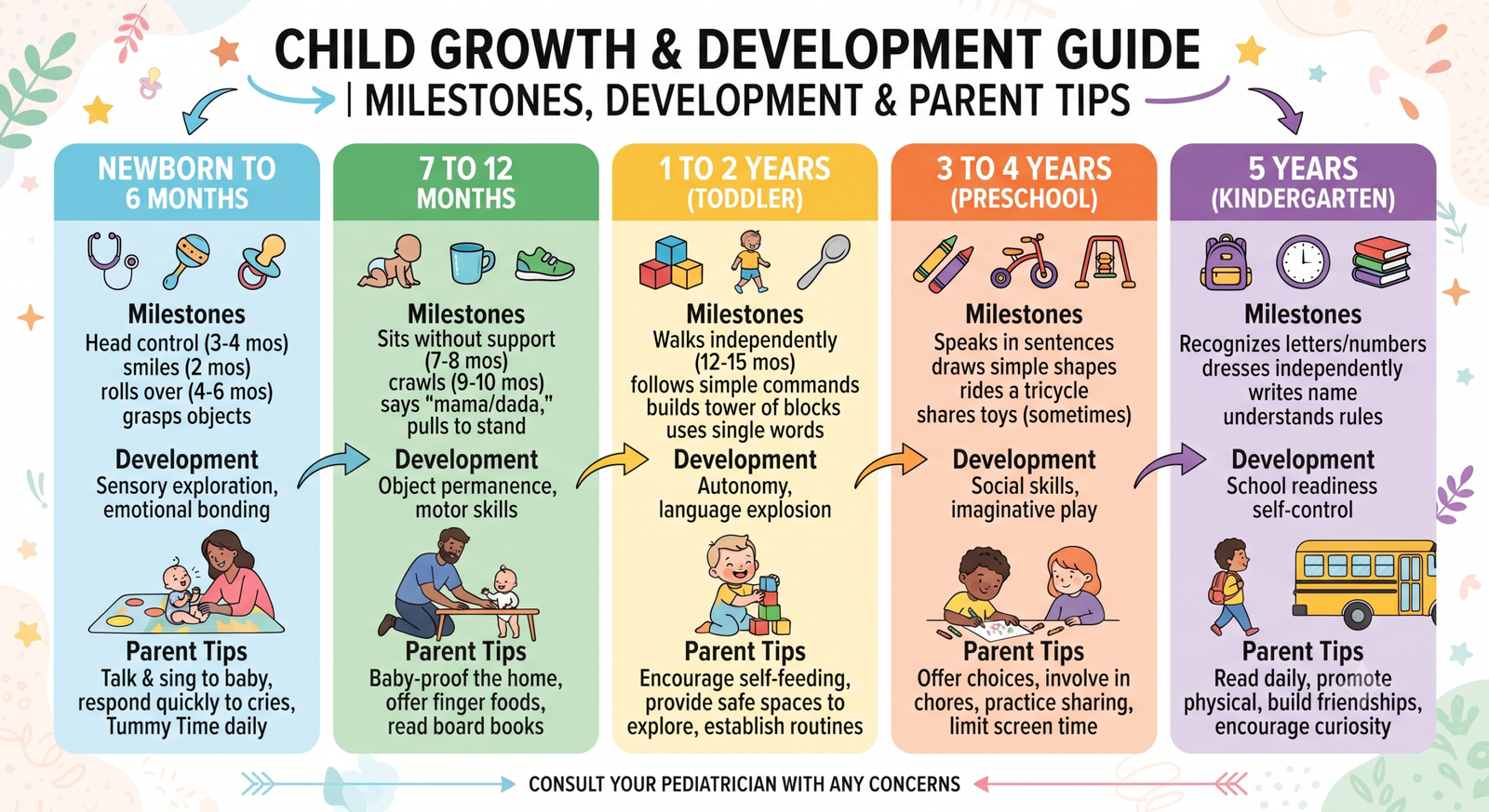
Age-Wise Developmental Milestones
Developmental milestones provide general guidance rather than strict deadlines. Some children reach milestones slightly earlier or later than others.
| Age | Common Developmental Milestones |
|---|---|
| Birth–3 Months | Responds to voices, smiles, lifts head during tummy time |
| 4–6 Months | Rolls over, reaches for objects, laughs, babbles |
| 7–12 Months | Sits independently, crawls, pulls to stand, says simple words |
| 1–2 Years | Walks, follows simple directions, points to objects, uses short phrases |
| 2–3 Years | Runs, climbs, speaks in short sentences, begins pretend play |
| 3–5 Years | Dresses with assistance, counts, asks questions, plays cooperatively |
| 6–12 Years | Reads, writes, develops friendships, improves coordination |
| 13–18 Years | Puberty, independent thinking, emotional maturity continues to develop |
Clinical Insight
Milestones describe when most children achieve certain skills. Missing one milestone does not necessarily indicate a developmental disorder. Pediatricians evaluate the child’s overall development, medical history, and progression over time before determining whether additional assessment is needed.
Growth Monitoring
Monitoring growth helps healthcare professionals assess a child’s overall health and identify potential concerns early.
Growth is usually measured during routine well-child visits.
Healthcare providers typically record:
- Height (or length for infants)
- Weight
- Head circumference (during infancy)
- Body Mass Index (BMI) for age when appropriate
These measurements are compared with standardized growth charts.
Why Growth Charts Matter
Growth charts help healthcare professionals determine whether a child is following an expected growth pattern over time.
Rather than focusing on one measurement, providers look for consistent growth.
Growth charts may help identify:
- Poor weight gain
- Excessive weight gain
- Short stature
- Rapid changes in growth pattern
- Possible nutritional concerns
- Certain medical conditions
Growth patterns should always be interpreted by a qualified healthcare professional because many healthy children naturally fall above or below average.
Body Mass Index (BMI)
For many school-age children and adolescents, BMI is one tool used to assess whether weight is appropriate for height and age.
However, BMI should never be interpreted alone.
Healthcare professionals also consider:
- Age
- Sex
- Growth history
- Puberty
- Muscle development
- Family history
- Overall health
Parents should avoid comparing one child’s measurements with another because healthy growth varies considerably.
Developmental Screening
Developmental screening is a structured way of checking whether children are meeting expected milestones.
Screening may identify children who would benefit from additional evaluation.
Healthcare providers may assess areas such as:
Gross Motor Skills
Examples include:
- Rolling
- Sitting
- Walking
- Running
- Jumping
Fine Motor Skills
Examples include:
- Picking up small objects
- Drawing
- Writing
- Buttoning clothes
- Using utensils
Language Skills
Healthcare professionals observe:
- Babbling
- Vocabulary
- Sentence formation
- Understanding instructions
- Communication with others
Cognitive Skills
Assessment may include:
- Memory
- Problem-solving
- Attention
- Learning
- School readiness
Social and Emotional Skills
Healthcare providers also consider:
- Eye contact
- Play
- Friendships
- Emotional regulation
- Interaction with caregivers
Expert Tip
Parents spend the most time with their children and are often the first to notice changes in development. If you have concerns about your child’s progress, discuss them during a well-child visit rather than waiting for the next scheduled screening.
Warning Signs That Deserve Medical Evaluation
Every child develops differently, but certain concerns should not be ignored.
Consult a pediatric healthcare professional if your child has:
- Loss of previously acquired skills
- Limited response to sounds or voices
- No meaningful eye contact
- Significant delays in movement
- Difficulty walking compared with expected developmental progress
- Very limited speech compared with peers
- Persistent feeding difficulties
- Poor growth over time
- Ongoing behavioral changes that interfere with daily life
- Difficulty interacting with family or peers
Early evaluation does not always mean a serious condition is present, but it helps determine whether additional assessment or support would be beneficial.
⚠️ Warning Box
Do not rely solely on online milestone checklists to diagnose developmental delays. Milestones are screening tools—not diagnostic tests. If you have concerns, seek guidance from a qualified pediatric healthcare professional for a comprehensive evaluation.
Nutrition for Healthy Growth & Development
Good nutrition provides the building blocks children need for healthy growth, brain development, strong bones, and a well-functioning immune system. While nutritional needs change as children grow, the goal remains the same: offer a balanced, varied diet that supports long-term health rather than focusing on individual “superfoods.”
Key Nutrients for Growing Children
| Nutrient | Why It Matters | Common Food Sources |
|---|---|---|
| Protein | Builds muscles and tissues | Eggs, fish, beans, lentils, lean poultry |
| Calcium | Supports healthy bones and teeth | Milk, yogurt, cheese, fortified plant-based alternatives |
| Vitamin D | Helps absorb calcium | Fortified foods, fatty fish, sunlight exposure* |
| Iron | Supports brain development and oxygen transport | Lean meat, beans, lentils, spinach |
| Healthy Fats | Important for brain development | Nuts, seeds, avocado, oily fish |
| Fiber | Supports digestive health | Fruits, vegetables, whole grains |
*Sun exposure recommendations vary depending on skin type, location, and local health guidance.
Healthy Eating Habits
Parents can encourage lifelong healthy eating by:
- Offering a variety of nutritious foods.
- Serving regular meals and snacks.
- Encouraging children to listen to hunger and fullness cues.
- Limiting sugar-sweetened beverages.
- Choosing whole foods more often than highly processed foods.
- Eating together as a family whenever possible.
💡 Expert Tip
Children often need repeated exposure to new foods before accepting them. Avoid forcing meals, and instead continue offering healthy options in a calm, positive environment.
Physical Activity & Play
Active play is essential for healthy physical, cognitive, and emotional development.
Regular movement helps children:
- Build strong bones and muscles.
- Improve balance and coordination.
- Develop motor skills.
- Maintain a healthy weight.
- Reduce stress.
- Improve concentration and learning.
Examples of age-appropriate activities include:
- Outdoor play
- Running and jumping
- Cycling
- Swimming
- Dancing
- Organized sports (when age-appropriate)
- Active family games
For younger children, unstructured play is just as valuable as organized activities because it encourages creativity and problem-solving.
Sleep & Brain Development
Sleep is one of the body’s most important recovery and development processes.
During sleep, children consolidate memories, regulate emotions, and release hormones involved in growth.
Healthy Sleep Habits
Parents can support better sleep by:
- Keeping a consistent bedtime routine.
- Creating a quiet sleep environment.
- Limiting screen use before bedtime.
- Encouraging physical activity during the day.
- Avoiding caffeine-containing drinks in older children.
Children who sleep well often have better attention, behavior, learning, and emotional regulation.
Language, Cognitive & Social Development
Children learn through everyday experiences. Talking, reading, singing, and playing together all contribute to healthy development.
Supporting Language Development
Parents can:
- Read aloud every day.
- Talk during everyday routines.
- Encourage conversations.
- Answer children’s questions patiently.
- Limit passive screen time.
Supporting Cognitive Development
Children learn best when they are encouraged to:
- Explore safely.
- Solve simple problems.
- Build with blocks.
- Draw and create.
- Play imaginative games.
- Participate in age-appropriate learning activities.
Supporting Social & Emotional Development
Healthy relationships help children develop:
- Confidence
- Empathy
- Self-control
- Communication skills
- Emotional resilience
Parents can support these skills by modeling respectful behavior, listening to children, and encouraging healthy friendships.
Myth vs. Fact
| Myth | Fact |
|---|
| Every child reaches milestones at the exact same age. | Development varies, and small differences are often normal. |
| A late talker will always have a developmental disorder. | Some children develop language later than others, but persistent concerns should be evaluated. |
| Short parents cannot have tall children. | Genetics influence height, but nutrition, health, and other factors also play a role. |
| More educational apps always improve development. | Balanced real-world interaction, conversation, reading, and play remain essential. |
| Growth charts compare children against each other. | Growth charts help monitor an individual child’s growth pattern over time. |
Decision Tree: When Should You Seek Medical Advice?
Ask yourself the following questions:
Is your child continuing to gain height and weight over time?
- Yes: Continue routine well-child visits.
- No or unsure: Schedule a medical evaluation.
Is your child generally meeting developmental milestones?
- Yes: Continue encouraging healthy development.
- No or concerned: Discuss your observations with a pediatric healthcare professional.
Has your child lost skills they previously had?
- Yes: Seek prompt medical assessment.
- No: Continue routine monitoring.
Are you worried about your child’s hearing, vision, speech, or behavior?
- Yes: Arrange an evaluation rather than waiting to see if the issue resolves on its own.
When in doubt, it is appropriate to seek professional advice. Parents’ observations are an important part of developmental assessment.
Parent Action Checklist
Growth
- □ Attend regular well-child visits.
- □ Track height and weight during routine appointments.
- □ Discuss any concerns about growth with your healthcare provider.
Development
- □ Encourage daily reading.
- □ Provide opportunities for active play.
- □ Talk and listen to your child every day.
- □ Support age-appropriate independence.
Nutrition
- □ Offer balanced meals.
- □ Encourage water instead of sugary drinks.
- □ Include fruits, vegetables, whole grains, and protein-rich foods.
Healthy Lifestyle
- □ Maintain regular sleep routines.
- □ Encourage daily physical activity.
- □ Limit recreational screen time.
- □ Promote safe play.
Frequently Asked Questions
1. Is it normal for children to grow at different rates?
Yes. Growth and development vary between children. Healthcare providers evaluate long-term growth patterns rather than comparing children with one another.
2. What are developmental milestones?
Developmental milestones are skills that most children achieve within a general age range, such as walking, talking, or social interaction.
3. How are developmental delays identified?
Healthcare professionals use developmental screening, medical history, physical examinations, and discussions with parents to identify concerns that may require further evaluation.
4. Does nutrition affect brain development?
Yes. A balanced diet supports healthy brain development, learning, and overall growth.
5. Why are regular pediatric checkups important?
Routine visits help monitor growth, assess development, provide preventive care, and identify potential concerns early.
6. Should I worry if my child reaches one milestone later than expected?
Not necessarily. Every child develops at an individual pace. However, persistent concerns or loss of previously acquired skills should be discussed with a healthcare professional.
Key Takeaways
- Growth measures physical changes, while development includes learning, movement, communication, and emotional skills.
- Every child follows a unique developmental pathway.
- Balanced nutrition, quality sleep, regular physical activity, and supportive relationships are essential for healthy development.
- Routine pediatric care and developmental screening help identify concerns early.
- Parents play a central role in supporting learning, confidence, and emotional well-being.
- If you notice persistent developmental concerns or loss of skills, seek professional medical evaluation promptly.
Medical Disclaimer
This article is for educational purposes only and is not a substitute for professional medical advice, diagnosis, or treatment. Every child develops differently, and healthcare decisions should always be made in consultation with a qualified pediatric healthcare professional. Seek immediate medical care if your child develops severe symptoms or you believe they are experiencing a medical emergency.
Conclusion
Every child grows and develops in their own unique way, shaped by genetics, nutrition, sleep, physical activity, healthcare, and the love and support they receive each day. While milestones provide helpful guidance, they should be viewed as flexible indicators rather than strict deadlines.
By attending regular well-child visits, encouraging healthy habits, providing a stimulating and nurturing environment, and seeking professional advice when concerns arise, parents can help children build a strong foundation for lifelong health and well-being.
Early support makes a difference. Staying informed and actively involved in your child’s growth and development is one of the most valuable investments you can make in their future.